.png)
Fire Detection Systems: Why Early Detection Matters in Commercial and Industrial Facilities


In commercial and industrial facilities, fire safety is not only a requirement. It is a critical part of protecting people, property, equipment, operations, and business continuity.
A fire can develop quickly, especially in environments with electrical equipment, machinery, storage areas, production lines, technical rooms, or high-value assets. That is why early detection plays such an important role in reducing risk and supporting a faster emergency response.
Fire detection systems are designed to identify signs of a possible fire event and activate the appropriate alerts, notifications, and system responses. When properly planned, installed, tested, and maintained, they become an essential part of a facility’s life safety strategy.
Fire Detection Systems: Why Early Detection Matters in Commercial and Industrial Facilities
Fire Detection Systems: Why Early Detection Matters in Commercial and Industrial Facilities is an important topic because commercial and industrial spaces often face higher safety risks than smaller buildings.

Early detection allows a facility to identify fire-related conditions before the situation becomes more dangerous. This can help alert occupants, notify responsible personnel, activate emergency procedures, and support a quicker response from the appropriate teams.
For commercial buildings, factories, plants, warehouses, and technical facilities, having a reliable fire detection system is not only about meeting requirements. It is about creating a safer environment and protecting the continuity of operations.
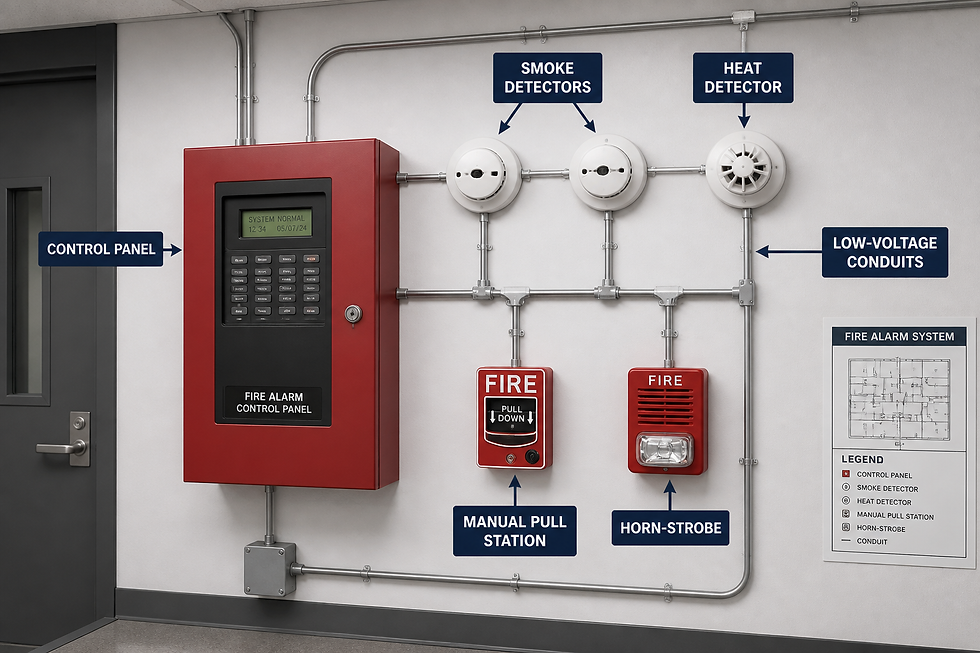
What Is a Fire Detection System?
A fire detection system is a life safety system designed to detect signs of fire and trigger alerts or notifications. Depending on the type of facility, the system may include smoke detectors, heat detectors, pull stations, notification devices, control panels, monitoring components, and other connected devices.
The goal is to identify a possible fire event as early as possible and communicate that information clearly.
In a commercial or industrial environment, fire detection systems may also be connected to other building systems, such as emergency communication, access control, suppression systems, or monitoring platforms.
Why Early Detection Is So Important
Early detection can make a major difference in how a facility responds to a fire event. The sooner a system identifies a potential issue, the faster the facility can take action.

Protects Occupants:
A reliable fire detection system helps alert people inside the building so they can follow emergency procedures and move toward safe exits.
Supports Emergency Response:
Early alerts help the appropriate teams respond faster and with better awareness of the situation.

Reduces Property Damage:
Detecting a fire event early may help reduce the spread of fire, smoke, and damage to equipment, inventory, and infrastructure.
Protects Business Operations:
Commercial and industrial facilities depend on continuity. Early detection can help reduce downtime and support faster recovery after an emergency.
Supports Compliance:
Fire detection systems help facilities meet applicable safety expectations, inspections, and code-related requirements.
Fire Detection in Commercial Facilities
Commercial buildings often include offices, retail spaces, hospitality areas, medical offices, schools, mixed-use spaces, and service facilities. These environments usually involve daily movement of employees, visitors, customers, contractors, or tenants.
Because of this constant activity, fire detection systems must be designed to provide clear alerts and reliable coverage throughout the building.
In commercial facilities, early detection helps protect occupants, guide evacuation, support emergency communication, and reduce risk in occupied areas.

Fire Detection in Industrial Facilities
Industrial facilities can have more complex safety needs. These spaces may include production lines, electrical rooms, mechanical areas, storage zones, processing equipment, machinery, or specialized environments.
In these settings, fire detection systems must be carefully planned based on the layout, risk areas, equipment, occupancy, and operational requirements of the facility.
For industrial environments, early detection is especially important because a fire event may affect not only people and property, but also production, equipment, materials, and critical operations.

The Importance of Professional Design and Installation
A fire detection system must be more than a collection of devices. It needs to be properly designed for the building and installed according to the facility’s needs.
Professional design helps determine where devices should be placed, how the system should communicate, what areas need special attention, and how the fire detection system should interact with other building systems.
Professional installation also helps ensure that the system is set up correctly, tested properly, and prepared for inspection and approval.
For commercial and industrial facilities, this level of planning is essential because life safety systems must operate reliably when they are needed most.
Testing, Inspection, and Maintenance Matter
Fire detection systems should not be forgotten after installation. Testing, inspection, and maintenance are essential to keep the system working properly over time.
Regular service helps identify device issues, communication problems, damaged components, or areas that may need adjustment as the building changes.
A facility may add new rooms, change layouts, update equipment, expand operations, or modify occupancy. When that happens, the fire detection system may also need to be reviewed to make sure it still supports the building effectively.

Fire Detection as Part of an Integrated Life Safety Strategy
Fire detection systems are even more valuable when they are part of a broader life safety strategy.
In many facilities, fire detection may need to work alongside emergency lighting, notification systems, access control, building automation, monitoring platforms, or specialized suppression systems.
This integrated approach helps improve coordination and makes it easier for a facility to manage safety-related systems under a more organized process.
Choosing the Right Partner for Fire Detection Systems
Choosing the right contractor is an important decision. A fire detection system requires technical knowledge, careful planning, code awareness, professional installation, testing, inspection, and ongoing maintenance.
An experienced partner can help evaluate the needs of the facility, design the right solution, install the system correctly, test performance, support inspections, and provide long-term service.
For commercial and industrial buildings, this level of support helps create safer, more reliable, and better-prepared facilities.

Conclusion
Fire detection systems are essential for protecting people, property, equipment, and operations in commercial and industrial facilities.
Early detection matters because it gives a building more time to respond, alert occupants, support emergency procedures, and reduce potential damage.
For businesses and facility managers, investing in a professionally designed and maintained fire detection system is an important step toward stronger life safety, better compliance, and long-term operational protection.


Comments